
History of Streetwear: From Skate Culture to Luxury Fashion

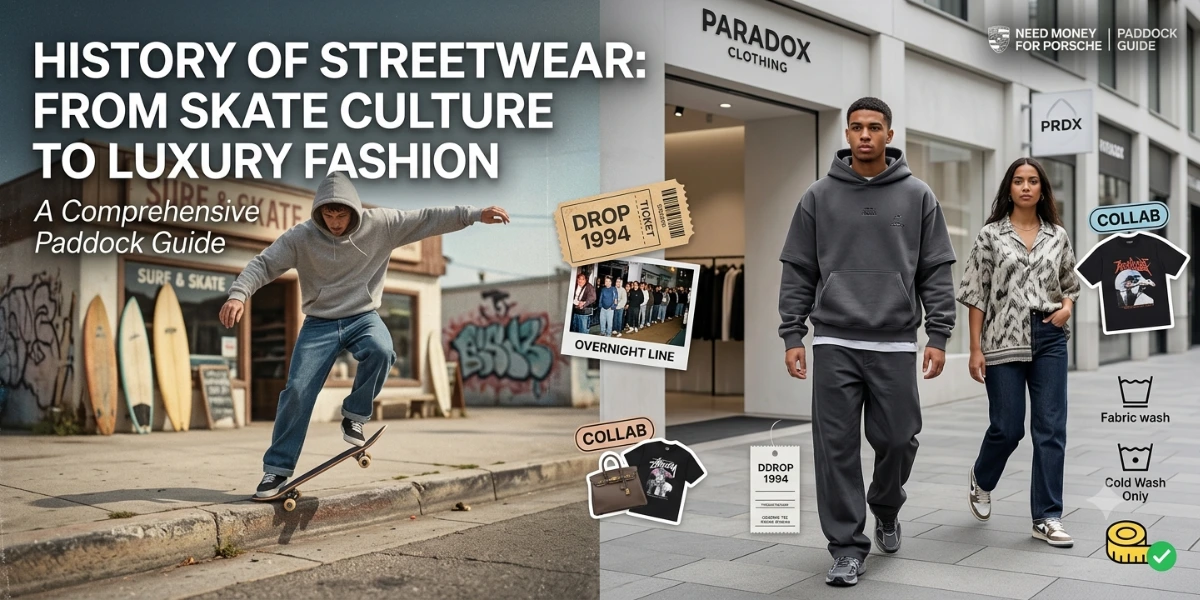
Streetwear is everywhere right now. You see it on your favorite rapper, on the kid skating outside your local park, and on runways in Paris and Milan. But most people never stop to ask where this style actually came from, or why a plain graphic tee can sell out in minutes while sitting on a rack at a mall store for months.
The truth is that streetwear did not start as a fashion trend. It started as a way for outsiders to say who they were without saying a word. Skaters, surfers, graffiti writers, and hip hop artists built a visual language out of necessity, rebellion, and community. Over the decades, that language grew louder, spread across continents, and eventually caught the attention of the same luxury houses it once stood against.
This guide walks through the full history of streetwear, from its earliest roots on the California coast to its current spot at the center of global fashion. If you have ever wondered how a hoodie became a status symbol, or why brands drop limited pieces instead of mass producing everything, you are about to get the complete picture.
What Is Streetwear and Why Does Its History Matter
Streetwear is casual clothing that grew out of youth subcultures rather than fashion houses. Think graphic tees, hoodies, sneakers, bomber jackets, and baggy fits. What separates streetwear from ordinary casualwear is the story behind it. Every piece carries a bit of attitude, a bit of identity, and a bit of rebellion against whatever the mainstream considered proper dressing at the time.
Understanding this background is not just trivia. It actually changes how you shop. Once you know that streetwear was built on authenticity, small batch drops, and community pride, you start to notice which brands are carrying that spirit forward and which ones are simply copying a look without understanding it. That is exactly the gap we want to close for you in this article, and later on we will show you how a modern label like Paradox Clothing keeps that same original energy alive today.
Streetwear Origins: Where It All Began
California Skate and Surf Culture
The earliest seeds of streetwear were planted in the late 1970s and early 1980s along the California coastline. Surfers and skateboarders needed clothing that could survive salt water, concrete, and constant movement. Fashion runways were the last thing on their minds. What mattered was durability, comfort, and a bit of personal flair.
Small independent labels started printing their own logos on plain t-shirts and sweatshirts as a way to mark territory and show loyalty to a crew or a local spot. Shawn Stussy is often credited as one of the earliest figures in this movement. He began scrawling his surname across handmade surfboards before moving that same signature onto t-shirts sold out of the trunk of his car. That simple logo tee eventually grew into a global label and set the template that countless streetwear brands still follow.
Skateboarding added its own flavor to the mix. Riders wore looser jeans and oversized shirts for extra range of motion, along with flat brim caps and beanies that would not fly off mid trick. This combination of comfort first design and DIY branding became the visual backbone of the entire skate scene, and it is the exact look people picture when they think of that era today.
The Role of Hip Hop and Graffiti in New York
While California was building the skate and surf foundation, something equally powerful was happening on the East Coast. Hip hop culture was taking shape in New York City, and clothing quickly became part of the message. Artists used fashion to signal confidence, crew affiliation, and personal identity in neighborhoods where making a statement mattered.
Tracksuits, gold chains, bucket hats, and bold sneakers became part of the uniform. Groups like Run DMC turned brands such as Adidas into cultural icons almost overnight simply by wearing them with pride on stage. Graffiti writers contributed their own visual style too, with bold lettering, bright colors, and rebellious energy that eventually found its way onto clothing graphics.
By the time these two coasts, skate culture on one side and hip hop on the other, started influencing each other, the foundation of streetwear was firmly in place. It was raw, it was personal, and it had nothing to do with what department stores were selling.
Streetwear Timeline: A Decade by Decade Breakdown
The 1970s: Seeds of a Movement
This was the quiet setup phase. Surf shops sold branded tees to locals. Skateparks became informal runways. Sneakers started functioning as social currency on basketball courts and in breakdance circles. Nobody called it a movement yet, but the ingredients were all coming together.
The 1980s: A Recognizable Style Takes Shape
The 1980s gave streetwear its first recognizable shape. Small skate and surf labels grew into real businesses. Hip hop crossed into mainstream visibility during its golden age, and artists became unofficial style ambassadors for entire neighborhoods. Adidas tracksuits, Puma sneakers, Kangol hats, and Fila sportswear became common threads connecting skaters, rappers, and city kids who had never met each other but somehow dressed alike.
The 1990s: The Big Streetwear Evolution
If one decade truly defines this shift from subculture to global movement, it is the 1990s. This was when independent brands stopped being a local secret and started becoming cultural institutions. Supreme opened its doors in 1994 as a small skate shop on Lafayette Street in Manhattan and quickly built a reputation for weekly limited drops that sold out almost instantly. That drop model, releasing small quantities on a set schedule to build hype, is still copied by brands all over the world today.
At the same time, Japan was developing its own streetwear scene in the Harajuku district. Japanese designers took the raw, DIY energy from America and refined it with meticulous detail and small batch scarcity, which only made the pieces more desirable. This cross pollination between America and Japan pushed streetwear from a niche subculture into a shared global language built around identity and creativity.
The 2000s: Going Global
By the early 2000s, streetwear had fully escaped its local roots. Skate brands and hip hop labels expanded into Europe and Asia. Collaborations between streetwear labels and larger companies started appearing, giving smaller brands access to bigger audiences while keeping their underground credibility intact. Sneaker culture exploded during this period too, with limited edition releases turning into full blown collector events.
The 2010s: Streetwear Meets Luxury Fashion
This is the decade that changed everything. Luxury houses that once dismissed streetwear as a passing trend started paying close attention to its influence and its sales numbers. High end designers began collaborating directly with streetwear labels, blending tailored craftsmanship with graphic tees, hoodies, and sneakers. Suddenly, a hoodie could carry the same price tag and prestige as a tailored blazer. Streetwear was no longer the outsider knocking on fashion’s door. It had become one of the most powerful forces inside the room.
The 2020s: Streetwear Today
Streetwear in the current decade is more accessible, more diverse, and more digitally driven than ever. Social media replaced the local skate shop as the main place culture spreads. Independent labels can now reach a global audience overnight, and shoppers expect the same authenticity and story that defined the earliest days of the movement, just delivered through a phone screen instead of a street corner.
The Rise of Sneaker Culture Alongside Streetwear
No conversation about clothing from this world is complete without talking about sneakers, because footwear was arguably the first true collector’s item in streetwear. Long before hoodies and graphic tees carried resale value, sneakers were already being traded, customized, and displayed like art. Basketball courts, breakdance circles, and skate parks all treated a fresh pair of shoes as a form of social currency.
Brands quickly caught on and began releasing limited colorways that turned ordinary sneaker drops into full blown events, complete with overnight lines and instant sellouts. That same excitement eventually spread to apparel, which is a big reason why the drop model became such a permanent fixture in streetwear. Once shoppers got used to lining up for shoes, lining up for a hoodie or a jacket felt completely natural. Sneaker culture did not just sit alongside streetwear, it helped write the rulebook that the entire industry still follows.
Streetwear vs Traditional Fashion: What Sets It Apart
It helps to understand exactly what makes streetwear different from conventional fashion, since the two are often lumped together today even though they came from completely different worlds.
Traditional fashion has historically been built around seasonal collections, formal runway shows, and a top down structure where designers dictate what becomes popular. Streetwear flipped that model on its head. It grew from the ground up, shaped by the people actually wearing it rather than a small circle of industry insiders. Scarcity, community input, and cultural relevance mattered more than red carpet appeal.
This bottom up structure is also why streetwear brands tend to build such loyal followings. Customers feel like they are part of the story instead of just buyers on the receiving end of a marketing campaign. That sense of ownership is something traditional fashion houses have spent years trying to replicate, often through the exact same streetwear collaborations mentioned earlier in this article.
How Skate Culture Fashion Shaped Modern Style
It is easy to underestimate just how much of today’s fashion still traces back to a group of skaters trying to solve a practical problem. Loose fits for movement, durable fabrics for hard landings, and bold graphics for self expression are all still core pillars of streetwear design decades later. Even the oversized silhouettes popular right now owe a direct debt to skaters who needed room to move.
This practical, function first mindset is also why streetwear pieces tend to age so well. A well made hoodie or graphic tee from this world is built to be worn hard, washed often, and still hold its shape. That kind of quality construction is something worth looking for whenever you shop, and it is a standard that a genuine streetwear label should never cut corners on.
The Bridge Between Streetwear and High Fashion
The relationship between streetwear and luxury fashion used to feel impossible. Runway designers built their reputations on exclusivity, tailoring, and old world craftsmanship. Streetwear built its reputation on accessibility, rebellion, and community. Yet both sides eventually realized they needed each other.
Luxury brands wanted the youth culture relevance and hype driven demand that streetwear had already mastered. Streetwear labels wanted the resources and craftsmanship that luxury houses had access to. According to ongoing industry coverage from Business of Fashion, one of the most respected publications in the fashion industry, streetwear influence has become one of the defining forces reshaping how younger consumers approach clothing, pushing legacy fashion houses to rethink everything from marketing to product drops.
That merger is why you now see hoodies priced like formal jackets, sneakers treated like fine art, and graphic tees sold in the same stores as tailored suits. The line between streetwear and high fashion has not just blurred, it has practically disappeared.
Why Streetwear Still Matters in 2026
Streetwear has survived this long because it was never really about the clothes alone. It was, and still is, about identity, belonging, and telling your own story through what you wear. That is exactly why the movement has outlasted so many fashion trends that came and went over the same fifty year period.
When you buy a genuine streetwear piece today, you are buying into a lineage that started with a skater printing his own logo on a t-shirt because nobody else was making clothes that fit his life. That spirit of doing things your own way, on your own terms, is the real reason streetwear still resonates with people who have never even set foot on a skateboard.
How Paradox Clothing Carries the Streetwear Legacy Forward
Reading about the history of streetwear is one thing. Actually wearing pieces that respect that history is another. This is where Paradox Clothing comes in. Based in the USA, the brand was built around the same values that shaped this entire movement from the beginning, comfort, durability, and a design language that speaks for itself instead of relying on empty hype.
If you have been searching for a wardrobe upgrade that actually connects to something real instead of a copy paste trend, the Paradox Hoodie collection is a great place to start. Every piece is designed with the same practical, movement friendly thinking that made the original skate era pieces so beloved, but with modern fits and finishing that hold up to everyday life. For anyone tired of thin, poorly stitched hoodies that lose their shape after a few washes, the prdx hoodie lineup was built specifically to solve that problem with heavier fabric and reinforced seams that last.
Beyond hoodies, Paradox Wear offers a full range of everyday essentials designed for people who want their clothing to say something without saying too much. Whether you are shopping for yourself or looking for a gift that actually gets worn on repeat, the collection reflects the same authenticity that has defined this culture since its earliest days on the California coast.
If your pain point has been finding a streetwear label in the USA that does not cut corners on quality just to chase a trend, this Paradox Clothing Brand was built exactly for that gap. You get the history, the attitude, and the craftsmanship in one place, without having to piece together your wardrobe from a dozen different stores that do not share the same standards.
Choosing the Right Streetwear Pieces for Your Wardrobe
Now that you understand where streetwear came from, here is how to actually shop it well.
- Start with fit. Streetwear was built on comfort and movement, so look for pieces that give you room without swallowing your frame completely.
- Prioritize fabric weight. Heavier cotton blends hold their shape longer and feel far more premium than thin, budget material.
- Look for a story. The best streetwear brands have a clear identity behind their designs instead of copying whatever is trending that week.
- Buy less, buy better. One well made hoodie will outlast five cheap ones, both in durability and in how it actually looks over time.
- Support brands that understand the culture. A label that respects where streetwear came from is far more likely to keep delivering quality pieces you will actually want to wear for years.
Final Thoughts on the History of Streetwear
Looking back at the full history of streetwear, one thing becomes clear. This was never just about clothing. It was about a group of skaters, surfers, rappers, and artists who needed a way to express who they were, and ended up building one of the most influential movements in modern fashion almost by accident. Every hoodie, graphic tee, and sneaker drop you see today carries a piece of that original story, whether the wearer realizes it or not.
If this journey through decades of culture and creativity has you looking at your own wardrobe differently, that is exactly the point. Understanding where streetwear came from makes it a lot easier to choose pieces that actually mean something, instead of just following whatever happens to be trending this month.
Frequently Asked Questions
What is the simplest definition of streetwear?
Streetwear is casual, comfortable clothing that grew out of skate, surf, and hip hop culture rather than traditional fashion houses. It usually includes graphic tees, hoodies, sneakers, and other pieces designed for everyday movement and self expression.
When did streetwear actually begin?
Most historians trace the earliest roots back to the late 1970s and early 1980s in California, where surf and skate labels began printing their own logos on simple t-shirts and sweatshirts.
Why did luxury fashion start embracing streetwear?
Luxury houses noticed the massive cultural influence and consumer demand that streetwear brands had already built with younger shoppers, and collaborating became a way to stay relevant and connect with that same audience.
Is streetwear only for skaters or hip hop fans?
Not anymore. While it started within those specific subcultures, streetwear has grown into a mainstream style that appeals to almost anyone who values comfort, individuality, and authentic design.
What should I look for when buying quality streetwear?
Focus on fabric weight, stitching quality, and fit. A brand that genuinely understands streetwear’s roots will usually reflect that in the construction and design of the piece, not just the logo printed on it.
How can I find streetwear brands that respect the culture’s history?
Look for labels that talk openly about their design philosophy and craftsmanship rather than only chasing trends. Brands like Paradox Clothing are built on that same authenticity that has defined streetwear since its earliest days.
Why do streetwear brands release limited drops instead of restocking constantly?
This model traces directly back to how early sneaker and skate brands operated. Limited releases create genuine scarcity, keep quality control tighter, and reward customers who follow a brand closely rather than mass producing pieces that lose their meaning over time.
Will streetwear ever go out of style?
It is unlikely to disappear because it was never built around a single trend to begin with. Since streetwear is rooted in comfort, identity, and self expression, those needs stay constant even as specific silhouettes and graphics evolve year after year.
Read Related Posts:-
- What Is Streetwear? A Complete Guide for 2026
- East Coast Streetwear: How Philadelphia Shapes Street Fashion
- Streetwear Glossary: Terms Every Bold Dresser Needs to Know