
What Is Streetwear? A Complete Guide for 2026

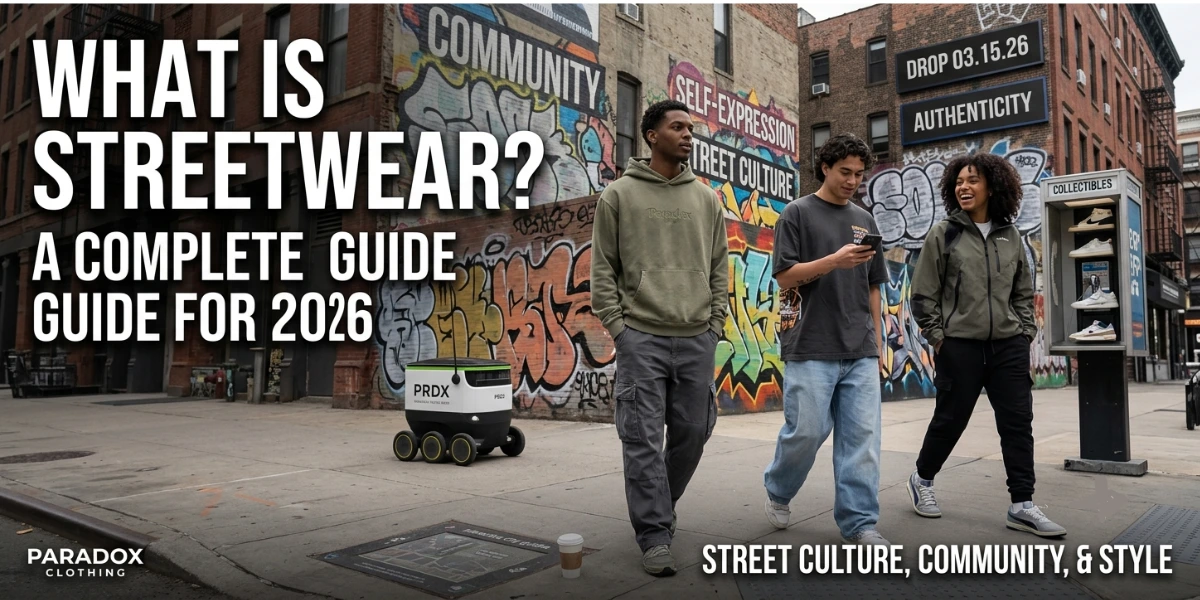
If you have ever scrolled through Instagram and wondered why a plain hoodie is selling for three hundred dollars, or why sneakers drop online and sell out in under a minute, you have already brushed up against streetwear. But what is streetwear, really? Is it just baggy clothes and bold logos, or is there something deeper going on?
This guide breaks it all down in plain, simple language. No fashion-school jargon, no fluff. By the end, you will understand exactly what streetwear means, where it came from, how it has changed heading into 2026, and how you can build a wardrobe that actually reflects who you are, not just what is trending this week.
What Is Streetwear? A Simple Definition
At its core, the streetwear definition is fairly straightforward: it is a style of casual clothing that grew out of skate parks, surf culture, hip hop, and urban youth communities, and later merged with limited-edition drops, graphic design, and streetwise attitude. Think hoodies, graphic tees, sneakers, cargo pants, and jackets that are made to be worn every single day, not just for special occasions.
But streetwear is more than the clothes on the rack. It is a mindset. It represents self-expression, community, and a rejection of the stiff, rule-bound world of traditional fashion. Where formal fashion says “follow this dress code,” streetwear says “wear what feels like you.”
Unlike high fashion, which is often shown on runways and produced in small, expensive batches for a narrow audience, streetwear was built by regular people for regular people. It just happened to get so popular that luxury houses eventually wanted a piece of it too.
The History of Streetwear in the USA
To really understand modern streetwear, you have to go back to where it started. The history of streetwear USA stretches across nearly five decades of subcultures colliding and reshaping each other.
The 1970s and 1980s: Skate, Surf, and Hip Hop Roots
Streetwear traces its earliest threads to Southern California surf and skate culture in the late 1970s. Brands making boards and wetsuits also started printing simple graphic tees to build a loyal following among skaters. Around the same time, on the other coast, hip hop culture was exploding out of New York City. Baggy jeans, tracksuits, bomber jackets, and bold sneakers became a visual language for a whole generation.
The 1990s: Birth of the Modern Streetwear Brand
The 1990s is when streetwear as we know it truly took shape. Small, independent labels began producing limited runs of clothing, often selling out of tiny stores in cities like New York and Los Angeles. This scarcity created hype long before “hype” was even a marketing term. Skateboarding, graffiti art, and underground music scenes fed directly into the designs, colorways, and attitude of these early brands.
The 2000s to 2010s: Streetwear Goes Global
By the 2000s, streetwear had crossed over from niche subculture into mainstream youth fashion. Sneaker culture exploded, collaborations between streetwear labels and luxury fashion houses became front-page fashion news, and hip hop artists turned into style icons whose outfits were dissected online the next morning. Social media accelerated everything, turning limited drops into global events and giving smaller American streetwear brands a direct line to customers anywhere in the world.
2020s and Beyond: A Mainstream Fashion Force
Today, streetwear is not a subculture anymore. It is one of the biggest forces in global fashion. According to industry research on the global apparel market, the streetwear sector was valued at roughly 195.54 billion dollars in 2023 and is projected to grow to nearly 278.79 billion dollars by 2032. That is not a niche trend. That is a full-blown global industry shaping how people dress, shop, and express identity every single day.
Streetwear Culture in 2026: What Has Changed
Fashion never stands still, and streetwear culture 2026 looks noticeably different from even five years ago. Here is what is actually shaping the scene right now.
Comfort and Quality Over Loud Logos
Streetwear has matured. Instead of chasing the loudest graphic or the biggest logo, people are gravitating toward clean silhouettes, better fabrics, and pieces that actually hold up after twenty washes. Industry observers tracking current street style note that this year’s direction leans on reduced prints, fewer overloaded logos, and a stronger focus on materials, colors, and cuts, with monochrome tones like black, gray, beige, and olive dominating the scene.
Oversized Yet Intentional Silhouettes
Baggy is still king, but it is a smarter kind of baggy. Wide trousers, relaxed denim, and oversized layers are styled with intention rather than thrown together randomly. The goal in 2026 is a look that appears effortless but is clearly well thought out.
Sustainability Is No Longer Optional
Consumers, especially younger shoppers, are paying attention to how their clothes are made. Recent apparel industry coverage highlights that authenticity, comfort, and sustainability are now driving consumer choices, pushing brands to rethink materials and production methods rather than just chasing the next viral drop.
Techwear and Functional Fashion on the Rise
Function is fashionable again. Water-resistant fabrics, utility pockets, and technical detailing are becoming everyday staples rather than niche outdoor gear, blending performance materials with an urban aesthetic.
Nostalgia Meets Innovation
Interestingly, 2026 is also bringing back preppy and vintage-inspired pieces, mixed with futuristic materials and unexpected color pops, proving that streetwear constantly borrows from its own past while still pushing forward.
Streetwear vs Casual Fashion: What Is the Real Difference
A lot of people use these two terms interchangeably, but there is a real difference between them, and understanding it will help you shop smarter.
Casual fashion is broad. It covers any relaxed, everyday outfit, whether that is a plain t-shirt and jeans from a department store or a simple sundress. It is not tied to any particular subculture or story. It exists purely for comfort and convenience.
Streetwear, on the other hand, always carries a cultural backstory. Every hoodie, graphic tee, or sneaker connects back to skate culture, hip hop, art, or music in some way. Streetwear brands often release limited quantities, which creates demand and a sense of exclusivity that ordinary casual clothing simply does not have. There is also a stronger community element. Wearing a specific streetwear label can signal that you follow certain artists, cities, or scenes.
In short, all streetwear is casual, but not all casual clothing is streetwear. The difference comes down to cultural roots, intentional design, and community identity.
Core Elements of Streetwear Style
Whether you are new to the scene or refreshing your closet for the year ahead, these are the building blocks worth knowing.
Hoodies and Sweatshirts
The hoodie is arguably the single most important piece in streetwear history. It is comfortable, versatile, and instantly recognizable. A well-fitted, quality piece like a Paradox Hoodie can anchor an entire outfit, whether you pair it with joggers for a relaxed day or layer it under a jacket for cooler weather.
Graphic Tees
Graphic t-shirts turn a simple piece of clothing into a canvas for storytelling. Whether it is bold typography, artistic illustration, or subtle back-print designs, graphic tees let you communicate something about your taste without saying a word.
Cargo Pants and Joggers
Function meets fashion here. Cargo pants with utility pockets and joggers with tapered or relaxed fits are staples for anyone building a streetwear wardrobe in 2026.
Sneakers
No streetwear outfit is complete without the right pair of sneakers. Low-profile classics, retro runners, and technical silhouettes are all having a moment this year, and a great pair can genuinely make or break an outfit.
Outerwear and Layering Pieces
Bombers, overshirts, and technical jackets add depth to an outfit while keeping practicality in mind, especially as techwear influences continue to grow.
Streetwear Around the USA: Regional Influences Worth Knowing
One thing that makes American streetwear so interesting is that it does not look the same everywhere. Different cities have shaped the culture in their own way, and those regional fingerprints still show up in what people wear today.
New York gave streetwear its hip hop backbone, with bomber jackets, fitted caps, and bold sneaker culture rooted in the block parties and music scenes of the Bronx and Brooklyn. Los Angeles brought the laid-back skate and surf influence, favoring looser fits, graphic tees, and a sun-soaked, easygoing attitude. Chicago and Detroit added a grittier, workwear-inspired edge, leaning on flannel layers, denim, and heavier boots mixed into streetwear staples. Meanwhile, Atlanta’s booming music scene pushed flashier, trend-forward pieces into the mainstream, often setting the tone for what goes viral next.
Understanding these regional roots helps explain why streetwear feels so personal. It was never designed top-down by a single fashion house. It grew organically from real neighborhoods, real music scenes, and real people who just wanted clothes that matched their lifestyle.
Streetwear Style Guide: How to Build Your Own Look
Here is a practical set of tips you can actually use, whether you are dressing for a casual weekend or want a wardrobe that feels put together every single day.
Start With Fit, Not Just Brand Names
Chasing hype pieces without thinking about fit is one of the most common mistakes. Oversized does not mean shapeless. Look for pieces that are roomy in the right places but still structured enough to look intentional.
Build Around Neutrals, Then Add Statement Pieces
A wardrobe built on black, white, gray, beige, and olive tones is easy to mix and match. Once you have that foundation, you can add one or two statement pieces, like a bold graphic hoodie or a standout sneaker, without your outfit looking overloaded.
Layer With Purpose
Layering is a signature streetwear technique. A t-shirt under an open overshirt, a hoodie under a jacket, or a long-sleeve peeking out from under a short-sleeve tee all add visual interest without extra effort.
Invest in a Few High-Quality Basics
Rather than buying ten cheap graphic tees, invest in a handful of well-made basics you will actually wear for years. A quality hoodie, a great pair of joggers, and one standout jacket will outlast a closet full of fast fashion.
Do Not Be Afraid to Mix Old and New
Some of the best 2026 outfits combine vintage-inspired pieces with modern cuts and fabrics. Mixing eras is a hallmark of current streetwear culture, so experiment rather than sticking to one strict formula.
How to Tell Quality Streetwear From Fast Fashion Copies
As streetwear has grown, so has the number of brands trying to cash in on the look without putting in the work on quality. Here is how to tell the difference before you spend your money.
Check the fabric weight first. Genuine streetwear hoodies and tees are usually made from heavier, mid-weight cotton or cotton blends that hold their shape wash after wash, while cheap imitations often feel thin and see-through. Look closely at the stitching around cuffs, hems, and seams. Loose threads or crooked stitching are red flags that corners were cut during production. Pay attention to the print method on graphics as well. Screen-printed or embroidered designs tend to last far longer than cheap heat-transfer prints that crack and peel after a handful of washes.
It also helps to research the brand itself. Established labels are usually transparent about where and how their clothing is made, while low-quality dropshipping operations tend to hide that information entirely. A few minutes of research before checkout can save you from a closet full of pieces that fall apart within a month.
Why Streetwear Resonates So Deeply With People
Streetwear has stuck around for decades because it solves a problem that other fashion categories often ignore: people want to look good and feel comfortable at the same time, without spending a fortune on clothes they will only wear once. It also gives people a sense of belonging. Wearing a certain label, style, or graphic can connect you to a community, whether that is skaters, music fans, artists, or just people who appreciate good design.
That emotional connection is exactly why streetwear has outlasted so many passing fashion fads. It is not about following strict rules. It is about wearing pieces that genuinely feel like an extension of who you are.
How Paradox Clothing Fits Into the 2026 Streetwear Scene
If you are tired of digging through overpriced, low-quality pieces just to find something that actually fits the streetwear look you are going for, that is exactly the gap Paradox Clothing was built to close. As a USA-based streetwear label, the brand focuses on the essentials that matter most this year: comfortable fits, durable fabrics, and designs that feel authentic rather than mass-produced for a trend cycle.
Whether you are searching for a cozy, well-fitted prdx hoodie to build your everyday rotation around, or you simply want a wardrobe refresh with pieces that will not fall apart after a few washes, exploring what paradox wear has to offer is a smart place to start. The goal is simple: give people real, wearable streetwear without the inflated hype pricing or the guesswork of sizing and quality that so many online stores leave you stuck with.
For anyone building a genuine streetwear wardrobe in the USA, checking out a trusted paradox clothing brand collection means you are not just buying clothes. You are investing in pieces designed around comfort, culture, and everyday confidence, which is really what streetwear has always been about.
Common Mistakes to Avoid When Getting Into Streetwear
Even people who love the aesthetic can trip up early on. Here are a few things worth watching out for.
Buying based on hype alone instead of checking fit and fabric quality usually leads to a closet full of pieces you rarely wear. Ignoring proportions is another common issue. Oversized only looks intentional when the rest of your outfit is balanced around it. Overspending on a single logo piece while neglecting the basics that actually tie an outfit together is also a trap many beginners fall into. And finally, copying an outfit exactly from social media without adjusting it to your own body type and personal taste often looks forced rather than authentic.
The Future of Streetwear Beyond 2026
Streetwear is not slowing down anytime soon. Analysts covering the broader apparel industry continue to project strong growth for the category well into the next decade, driven by younger consumers who value individuality, comfort, and community over rigid dress codes. Expect continued blending of digital culture with physical clothing, deeper investment in sustainable materials, and closer collaboration between independent labels and larger fashion institutions.
We are also likely to see smaller, direct-to-consumer American brands playing a bigger role in shaping trends, simply because they can move faster than large corporations and respond directly to what their community is asking for. Customization is another area worth watching, as more shoppers want pieces that feel personal rather than mass produced, whether that means limited colorways, small-batch drops, or made-to-order options. If the last few decades are any indication, streetwear will keep evolving exactly the way it always has: from the ground up, shaped by real people rather than boardrooms alone.
Final Thoughts
So, what is streetwear at the end of the day? It is comfort with meaning. It is culture stitched into cotton. It is a hoodie that tells a story and a pair of sneakers that says more about you than words could. From its roots in skate parks and hip hop scenes to its position today as a multi-billion dollar global industry, streetwear has never stopped being about authenticity and self-expression.
If you are ready to build a wardrobe that reflects that same authenticity, exploring a trusted USA streetwear label is a great next step, and it does not have to mean overspending or settling for poor quality. The right basics, worn with confidence, will always outlast any passing trend.
Frequently Asked Questions
What is streetwear in simple terms?
Streetwear is a casual clothing style rooted in skate, surf, and hip hop culture, known for hoodies, graphic tees, sneakers, and limited-edition drops that carry cultural meaning beyond just being comfortable clothes.
Is streetwear still popular in 2026?
Yes, streetwear remains one of the fastest-growing categories in global fashion, with continued demand for oversized fits, sustainable materials, and techwear-inspired functional pieces.
What is the difference between streetwear and casual fashion?
Casual fashion is simply relaxed, everyday clothing with no cultural backstory, while streetwear is tied to specific subcultures like skate, hip hop, and art scenes, and often involves limited releases and community identity.
What are the must-have pieces for a streetwear wardrobe?
A quality hoodie, graphic tees, cargo pants or joggers, versatile sneakers, and at least one strong outerwear piece cover most of the essentials needed to build a solid streetwear rotation.
Can streetwear be affordable?
Absolutely. While hyped resale pieces can be expensive, many USA-based streetwear brands offer well-made, comfortable essentials at reasonable prices without the inflated markup of limited drops.
How did streetwear start in the USA?
Streetwear began in the late 1970s and 1980s through Southern California skate and surf culture alongside New York hip hop fashion, later evolving through small independent labels in the 1990s into the global industry it is today.
Read Related Posts:-
- History of Streetwear
- East Coast Streetwear
- Streetwear Glossary
- What Is Paradox Clothing? The Brand Behind the Contradiction
- Paradox Hoodies: The Complete Buyer’s Guide (2026)